Showing posts with label Training. Show all posts

Tuesday, November 27, 2012

Puppy Socialization

Socializing your puppy is a VITAL part of raising a puppy.  It is 100000 times easier to help your puppy develop social skills now, than it is after that first year.  I completely disagree with the trainers and breeders who say that there is no hope for a dog who didn't get that socialization - there is always hope.  But it takes a lot of patience and time.  Its drastically easier to work with your puppy now, than to wait!

Karma is in her second puppy class, called "Wonder Pets".  We are working with her manners, especially not jumping excitedly on new friends, which is such a bad habit puppies try to develop, and needs stopped while they are small!

Karma's favorite part of class is playtime.  She is very outgoing and friendly, and loves playing.  Her puppy class is filled with several very respectful puppies, so its a great opportunity for her to develop proper play skills.

 3 out of 4 puppies in the class are Berners, lol!
 Karma & Milo (aka Koda's Orange pup!)
 Playtime!
Our favorite part is how happily worn out Karma is after class!


Our brother & sister in-law also have a puppy, who is a month older than Karma, which has been great for socializing!

Aren't they a cute pair?


Monday, September 10, 2012

The FEAR Periods

The first 8+ weeks, your puppy was with us, receiving lots of good, positive socialization.  Their whelping box was in our family room / kitchen, and they were in the middle of our family life.  At different times, they heard children, stomping, running, wii-mote sounds, computer games, dishwasher, washer and dryer, babies crying, doorbell ringing, and hundreds of other noises.  They had quiet, calm time.  They had time to explore on many different surfaces.  They met lots of children and friends who came over to play, snuggle, talk to, and adore them.  They had a very positive start, and we worked diligently to ensure that your puppies early development was social and happy, with lots of great experiences.

So, why now is your social, happy puppy suddenly jumping at strange sounds, and panicking at new (or not-so new) situations? Why are they suddenly scared of the sound their dog tag makes on their food dish, or terrified of going on their normal walk?

First of all, take a deep breath, and stop stressing.  This behavior is a NORMAL STAGE of puppy development.  How you handle this stage is important, but you didn't do anything to cause this stage of development.  Now that you can let go of some of that "puppy-owner-guilt", remember that your puppy WILL pick up on how you are feeling and how you react to this stage.  If you are stressed, he will think "See, I should be worried about this, because my human is worried!"

The best thing to do is stay calm and positive.  Never punish or scold your puppy for being scared, all that will do is reinforce their fear.  Also be cautious not to coddle and pet your puppy.  What comforts us as people, doesn't give comfort to a dog, trying to soothe them is like saying: "You are right, that IS scary!"   Stay positive but firm, and MOVE FORWARD!

If walks are causing panic, work with your puppy.  Have him on a leash, and walk with him several times a day.  When he starts to slow down, or plant his feet down, encourage him: "Come on buddy, we're headed to the park!  Good job!".  When they sit or try to high tail it home, do not let them.  Each time, stay calm, and don't let your puppy dwell on the fear.  Pick them up, set them on their feet, and keep going, encouraging them with a happy, calm voice.

There are a lot of good articles written on the fear periods, so I will share those.  I encourage you to stay calm, reassure yourself that you are doing great, and remember that your puppy just needs you to show him the way!

Each bullet is a link, I found each of these articles helpful in their own way:

We hope these help.  Our intent is NOT to replace working with a trainer, so if you have additional concerns, a good trainer that works with POSITIVE training techniques may be able to offer some hands-on advice and training.  

Sunday, August 26, 2012

Behavior 101: Puppy Biting!

As Koda's puppies reach their teething stage, we've gotten several questions about the best way to stop puppy biting.  First of all, it is VERY NORMAL at this age (3-5 months) for your puppy to mouth / bite on toys, furniture, and YOU.  However, they need to learn very quickly "bite-inhibition", and that is now up to you.


While your puppies were here with their mama and littermates, they practiced playing and play-fighting.  They would nip at each other, bite, tug, and tackle.  However, if they played too rough, or dug those sharp little teeth in, their littermate would yelp, and refuse to play.  Very quickly, each puppy began to learn that if they were too rough, they didn't get played with.  This is our recommended technique for dealing with puppy biting.  When your pup sinks those teeth in, give a high pitched yelp, and turn away.  Ignore them for 20-30 seconds, then you can go back to giving them attention. NEVER hit them or hurt them for biting, it gives conflicting messages to the puppy and does NOT HELP!


Right now, those baby teeth are bugging them.  They are getting ready to lose them in the next couple months, making way for their adult teeth.  But, learning how to mouth softly and be gentle is VITAL right now.  They have those sharp little teeth, but not a lot of jaw-strength.  Once those adult teeth come in, they aren't so sharp, but their jaw becomes more powerful, and can do damage.  They need to learn bite-inhibition now, so please work diligently with them.

Tip: Don't play Tug-o-War with your puppy, as it encourages biting and is detrimental to learning bite-inhibition.


Here's some more good reading on this topic:

Hope that helps :-)


Thursday, August 23, 2012

Puppy Development

Puppy training encompasses so many different points.  There's housebreaking & potty training, kennel training, obedience training, socialization, and more.  What do you focus on when, and how?

The "Developmental Stages" of puppies. 


Their first 7-10 weeks with us included lots of developmental opportunities, including neurological stimulation, daily one-on-one time with each puppy, plenty of household noises (vacuum, kids, infants, fans, etc), exposure to new surfaces (wood, tile, linoleum, carpet, cement, grass, etc), lots of playtime with mama and littermates, playtime with new people, and much more.  We worked with them every day to come home to you well socialized and well rounded.  


Now it's up to you! 

Our main thoughts on the puppy time period (and links to helpful reading!):

~ Socialize, socialize, socialize!  Let friends come over and give treats to your puppy.  Expose your puppy to new sounds and experiences.  If something sets them off, or freaks them out, gently repeat that something with treats, and work to help your puppy associate it with positive reinforcements.  A great socializing opportunity can be found in puppy training classes.

~ Be aware of the "fear period(s)".  Puppies tend to have these periods from 8-11 weeks, and again around 6-14 months.  Work to make sure that they have lots of great experiences!  

~ Be cautious of Parvo.  It can affect any dog, but puppies are the most vulnerable.  There is never any guarantee even if you are cautious, but little things can help a lot. 
Most of all, let your Berner be a member of your family!  Like children, they need boundaries and firm rules, but thrive under love and gentle kindness!


Thursday, June 21, 2012

Housebreaking your Bernese Mountain Dog Puppy

Someone asked me the other day if I had any tips for housebreaking a new puppy.  All I could think to say was: "Patience.  Lots of patience."  Once I really sat back and thought about it, I realized that there were a few little things that helped us get through the experience, in addition to ALL THAT PATIENCE ;)

1. Crate Training - 

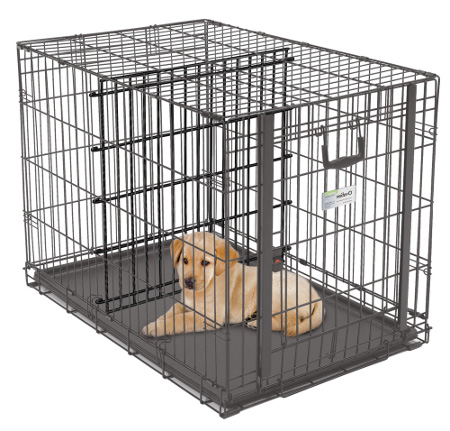
I am a huge advocate of crate training.  Not only does it help with housebreaking, but it also ensures your puppy's safety when you have to leave the puppy at home without supervision.  Dogs don't see it as a cage, they see the crate as their den. We train our dogs by using a key phrase: "Go to bed." When they go into the crate, they immediately get a treat.  It takes puppies a while before they will enter the crate of their own accord (who would want to stop playing?!), but keep the crate a positive place.  Our dogs crates are their very own space.  We don't force them to come out, we respect their den.  We will open the door to the crate, and within a little time, they will come out when they are ready.  Their crate has their blanket or dog bed, toys, whatever makes them feel like it is THEIR space.  People who come over notice that we will cover the crate when Dakota is barking at new people.  This helps her feel secure, and safe in her little den, despite the strangers.  Once she is calm and relaxed, then its a great time for her to come meet our new friends.  Remember, Berners are supposed to be aloof and stand-offish to strangers.  This is a great article by the US Humane Society about Crate Training.

Now, you're taking home a 12 pound puppy that will grow into a 100 pound dog ... how many crates are you going to need over the next year?!  ONE!!!  Shop around, and find an extra-large crate that offers a puppy divider.  It fits inside the crate, and makes the accessible space smaller or larger, depending on your need.  


2. Bell Training - 

The bell training method worked very well for us. Basically, you hang bells at your door, and every time you take the puppy out to go potty, you gently help them ring the bells with their front paw.  It takes a little patience, but fairly quickly, the puppy will start ringing the bells himself when he realizes that he needs to go out, and the bells alert the people: "Please let me out!" We bought our bells on Etsy from THIS SELLER, but you can buy them many places, or make them yourself.


3. Consistency - 

This may be the most important part of housebreaking your puppy.  Make a schedule, and set an alarm for yourself to take the puppy out at regular intervals.  Get to know your puppy.  We are noticing that some of the puppies relieve themselves before they eat, and others after they eat.  Get to know what your puppy's natural rhythm is and work with it.  


4. Housebreaking MYTHS - 

"Stick his nose in it" - REALITY: by sticking his nose in it, you teach him that "See this spot here?  Recognize it.  Smell it.  Get used to that smell, and its location" ... which means, "Use this spot, okay?"  No matter how upset you are when you put his nose in it, its not going to help at all.  Promise.

"Spank him with a newspaper" - REALITY: You are simply teaching him that you hit randomly.  He does NOT associate it with his accident, and all this will tell him is: "I'm dangerous to be around because at any random moment, I will smack you FOR NO REASON."

Using these housebreaking myths are detrimental to your dog's potty training experience.  Its true for all dogs, but ESPECIALLY a Berner.  Because they are so very sensitive to their humans, becoming angry or frustrated teaches your puppy to be shy and fearful.  Be patient and kind!  Your puppy WILL get the hang of it, and your dog's long-term relationship with you, and all people will be determined, in part, by his housebreaking experience. 

If you ever have trouble or concerns with housebreaking your puppy, talk to your veterinarian!  They can make sure that your puppy is doing fine physically, and give you suggestions and ideas tailored to you and your dog!


Wednesday, May 02, 2012

Training a Bernese Mountain Dog

Perhaps the most important thing when training is that it is very important to be very sparing with punishment or scolding while training a Berner.  Because this breed is so people-oriented, they will react badly to being scolded or punished.  Scolding quickly teaches them to be shy and fearful.  Instead, try to work with a lot of positive reinforcement - a Berner loves nothing more than a pat on the head, scratch behind the ear, or a little treat.  Sometimes the best reward you can give is praise.  Gushing praise.  Stay consistent, and your Berner will reward you with a lifetime of loyalty and obedience.


    A couple of important training issues you need to address with your Berner Puppy:
Because a Bernese Mountain Dog is such a large and strong breed it is important to begin your leash training as soon as possible. Berners love to pull while on leash (they were bred to pull carts) but with some proper training they will happily trot along-side you.  Consistency is so important.  It just takes a little practice, and your daily walks will soon be great times.

We highly recommend Puppy classes, as it helps your puppy with both socializing and training.  Just be careful to wait until your vet tells you that your pup is ready and has the necessary vaccines.   

Like most dogs, Bernese Mountain dogs can become a little jumpy, especially while they are young.  It's crucial to get your pup out of this bad habit of jumping before he gets too big.  Its much easier to correct when they are small than waiting until the are 80+ pounds and can take you (and your guests) down.

There are MANY different kinds of training beliefs out there, from the "Pack mentality" to clicker training,  You will need to find what works for your puppy and you.  Just remember that your Berner will thrive on consistency and gentle-but-firm rules.  They don't need to you dominate, just be a kind and gentle leader, and they will follow you to the ends of the earth.

Most of all, when training a Berner, if you get frustrated: Take a Break.  Put yourself in a "time-out" to collect and calm yourself.  It is SO much easier for everyone to stay calm with your Berner.  If you yell, get irritated, or frusterated, your Berner will be very sensitive to it, and react poorly.  Being "aloof" is part of their nature, but they need to be nurtured with love and kindness so they don't become fearful or aggressive.