Showing posts with label Breeding Philosophy. Show all posts

Wednesday, July 25, 2012

Berner-Garde

We have added Koda and her puppies to the Berner-Garde Database (We added individual owner info as "private" so you can decide if you would like to participate)
The Berner-Garde Foundation was established to collect, maintain and disseminate information about genetic diseases observed in the Bernese Mountain Dog.
 Its goal is to help breeders reduce genetic disease while breeding for good temperament and type.
In the future, this collection of information will be the basis for studies researching the cause of genetic disease. 
 It is the hope of all who know and love a Berner that the work of Berner-Garde will lead to an understanding of genetic disease in the breed. 

We plan to continue adding information to the Berner-Garde database as it comes available, including Koda's upcoming OFA test results. (OFA xrays scheduled for Aug 2, 2012)

Wednesday, July 11, 2012

... my sentimental ramblings


Its funny, a family member who has bred dogs for 50+ years told us something along the lines of "when the first puppy goes home, you'll be sad, but by the time the last puppy goes home, you will be jumping for joy."

No disrespect, but that individual was very wrong.

With each puppy that has gone home, we've become increasingly sadder.

To be clear, we couldn't be happier with the families and individuals who have adopted our puppies.  Its such a great feeling to see people matched up with their puppy.  Its just that these puppies became a part of our family, and with each one that goes home, we feel like a part of our family left.  The only thing that makes this feeling okay is that we feel like our puppies' families are now an extension of our own berner family.  We've asked everyone for pictures and updates along their journey with their puppy, and hope to have a "family reunion" with our puppies and their families one day.

Before anyone gets the wrong idea, raising puppies is NOT easy.  Its crazy hard work.  And I have to admit, I find myself somewhat insane for raising puppies AND 4 young children at the same time.  I've had well-meaning people suggest putting up a kennel for the dogs to live in outside, or in the garage, but what they don't realize is that our dogs are not just animals.  They are our pets, members of our family.  The mama dog is OUR pet first and always, and she is a priority.

We aren't the stereotypical "breeders".  Our puppies are raised INSIDE our home ... inside our family room and kitchen to be exact.  They are around our family constantly.  It makes some things difficult, like keeping everything clean (mopping 3-4x a day, anyone?) or quiet (Quiet, what's that? Hahahaha), but having our sweet puppies inside helps with one of our main goals: helping our puppies be very well socialized and ready to be a true member of your family.  It also helps our mama dog feel safe and loved, which helps her be more attentive and maternal towards her puppies.

This has been quite the journey.  We still have puppies here, and lots of cleaning and caring left to do, but looking back on our decision to have this litter, it has been an amazing adventure and experience for our whole family.  We've made a lot of new friends, gotten endless snuggle time with darling little puppies, and learned about what brings us joy ... these beautiful Bernese Mountain Dogs.

Wednesday, June 27, 2012

First Vet Visit & What to feed your Berner

Today I loaded up 9 puppies and 4 kids, and we went on an excursion to the veterinarian's office.  I wish I could have taken a picture, but my hands were very full.  I'm sure we were quite a sight.

The vet gave each puppy a thorough exam, and then administered the 6 week shots.  Every single puppy looked, felt, and sounded perfect and healthy.  The vet and his techs were all very impressed with how well the puppies handled the experience - they were all calm, checking things out with wide eyes.  Once in a while, one would give a little whine, and we would reassure them, and pet them, and they would calm right down.  By the end of the hour-long experience, everyone's tails were still wagging.

Their next visit should be around 8 weeks, when they should receive their next set of shots, and another dose of wormer,

The puppies are also weaned, and are eating their puppy food wonderfully.  We feed them Purina Pro Plan LARGE BREED PUPPY kibble.  That large breed variety is very important for your Berner, regular puppy food will cause them to gain weight too quickly, and cause strain on their joints and hips, which can lead to hip dysplacia or other problems.  Keep them on the PUPPY formula until their first birthday, then you can transition them over to a large breed DOG food


A note about the Purina Pro Plan - Petco's perks program will award you free bags. 
I believe that for every 10 bags, they give you a free one (it must be within 
the same 12 month period).  It doesn't seem like much, but it adds
 up so quickly, so may be a good option for some owners. 
Make sure to ask about it if that is the food you choose to continue with.

Whatever you decide to feed your puppy, make sure you transition them to the new food, even if you are opting for a "raw diet".  All our puppies will come home with a small bag of Purina Pro Plan Large Breed Puppy food.  If changing foods, mix our dog food with your new dog food for a week to avoid too much digestive troubles. Slow transitions are good!  A good resource for berner-specific information on the different feeding options is HERE.


Thursday, June 21, 2012

Housebreaking your Bernese Mountain Dog Puppy

Someone asked me the other day if I had any tips for housebreaking a new puppy.  All I could think to say was: "Patience.  Lots of patience."  Once I really sat back and thought about it, I realized that there were a few little things that helped us get through the experience, in addition to ALL THAT PATIENCE ;)

1. Crate Training - 

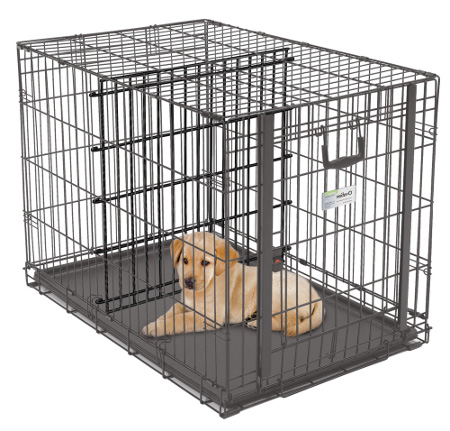
I am a huge advocate of crate training.  Not only does it help with housebreaking, but it also ensures your puppy's safety when you have to leave the puppy at home without supervision.  Dogs don't see it as a cage, they see the crate as their den. We train our dogs by using a key phrase: "Go to bed." When they go into the crate, they immediately get a treat.  It takes puppies a while before they will enter the crate of their own accord (who would want to stop playing?!), but keep the crate a positive place.  Our dogs crates are their very own space.  We don't force them to come out, we respect their den.  We will open the door to the crate, and within a little time, they will come out when they are ready.  Their crate has their blanket or dog bed, toys, whatever makes them feel like it is THEIR space.  People who come over notice that we will cover the crate when Dakota is barking at new people.  This helps her feel secure, and safe in her little den, despite the strangers.  Once she is calm and relaxed, then its a great time for her to come meet our new friends.  Remember, Berners are supposed to be aloof and stand-offish to strangers.  This is a great article by the US Humane Society about Crate Training.

Now, you're taking home a 12 pound puppy that will grow into a 100 pound dog ... how many crates are you going to need over the next year?!  ONE!!!  Shop around, and find an extra-large crate that offers a puppy divider.  It fits inside the crate, and makes the accessible space smaller or larger, depending on your need.  


2. Bell Training - 

The bell training method worked very well for us. Basically, you hang bells at your door, and every time you take the puppy out to go potty, you gently help them ring the bells with their front paw.  It takes a little patience, but fairly quickly, the puppy will start ringing the bells himself when he realizes that he needs to go out, and the bells alert the people: "Please let me out!" We bought our bells on Etsy from THIS SELLER, but you can buy them many places, or make them yourself.


3. Consistency - 

This may be the most important part of housebreaking your puppy.  Make a schedule, and set an alarm for yourself to take the puppy out at regular intervals.  Get to know your puppy.  We are noticing that some of the puppies relieve themselves before they eat, and others after they eat.  Get to know what your puppy's natural rhythm is and work with it.  


4. Housebreaking MYTHS - 

"Stick his nose in it" - REALITY: by sticking his nose in it, you teach him that "See this spot here?  Recognize it.  Smell it.  Get used to that smell, and its location" ... which means, "Use this spot, okay?"  No matter how upset you are when you put his nose in it, its not going to help at all.  Promise.

"Spank him with a newspaper" - REALITY: You are simply teaching him that you hit randomly.  He does NOT associate it with his accident, and all this will tell him is: "I'm dangerous to be around because at any random moment, I will smack you FOR NO REASON."

Using these housebreaking myths are detrimental to your dog's potty training experience.  Its true for all dogs, but ESPECIALLY a Berner.  Because they are so very sensitive to their humans, becoming angry or frustrated teaches your puppy to be shy and fearful.  Be patient and kind!  Your puppy WILL get the hang of it, and your dog's long-term relationship with you, and all people will be determined, in part, by his housebreaking experience. 

If you ever have trouble or concerns with housebreaking your puppy, talk to your veterinarian!  They can make sure that your puppy is doing fine physically, and give you suggestions and ideas tailored to you and your dog!


Thursday, June 07, 2012

A little extra love

Puppies (like people!) have days when they just need a little extra love and attention. One of our puppies was having a rough day this morning, and whined, cried, and howled while his brothers and sisters tried to sleep. I tried toys, letting him play in the grass, nothing was helping, and Koda was getting stressed trying to comfort the squawking puppy. Finally, I picked him up, checked him over to make sure nothing was physically wrong. Then I snuggled him up next to me, and let him feel all cozy in my shirt. Within 30 seconds, he was curled up and fast asleep, peaceful at last.


We can't forget that our puppies are just babies. They whine because they feel a need. Whether that need is food, a potty break, or just some extra love and snuggles, they are simply trying to say "I need you!". Be patient, gentle but firm, and loving, and your puppy will grow into a wonderful companion for you!

Thursday, May 10, 2012

Is a Bernese Mountain Dog right for you?

For me, the biggest questions of compatibility are these:


1. Will this be an indoor or outdoor dog?  If you are looking for an outdoor dog, please find a different breed.  Bernese Mountain Dogs *NEED* to be with their family.  They need to be able to be close to their people, able to see them, hear them, and be near them.  Leaving a berner alone for extended periods of time will stress them out, and create a perfect storm for bad behavior.  Crate training is a good option for when you aren't able to be home.  A crate, in a main room (such as a family room or kitchen), works very well and keeping a berner out of trouble and harm while you aren't home, especially while they are a puppy.  Also, Berners are not suited to hotter climates, so having them indoors helps them stay cooler.

2. Can you deal with shedding?  Berners DO shed.  The more you brush them out, the less hair you'll find in your house, but they do have a couple times a year when they blow out their coat, and its hard to keep up.  If dog hair has you in a panic, and you hate vacuuming, then this isn't the breed for you!

3. Can you love and lose? Bernese Mountain dogs have a shorter life expectancy than most breeds, and can have health issues.  There is a Swiss saying: "Three years a puppy, three years a good dog, three years an old dog and the rest is a gift".  However, most of us who love the breed, feel like any amount of time with a Berner is a beautiful gift.  These dogs will love you dearly for their lives, and be bonded to you always. As for health, we are working to breed out health issues, but they are still there, and can still happen to any dog, regardless of their genetic health.  To me, it is worth the shorter life span, and the health risks to be able to always have the love of a Berner in our home.

There's plenty of other considerations to think of before bringing a Bernese Mountain Dog home (or any dog!), but those are my top three.  There's a lot of compatibility quizzes online, and some of them give great input, while others put importance on items that I don't find to be as much a concern.  They are great sources of information though, and can bring up concerns that may not have been thought of.  


Wednesday, May 02, 2012

Training a Bernese Mountain Dog

Perhaps the most important thing when training is that it is very important to be very sparing with punishment or scolding while training a Berner.  Because this breed is so people-oriented, they will react badly to being scolded or punished.  Scolding quickly teaches them to be shy and fearful.  Instead, try to work with a lot of positive reinforcement - a Berner loves nothing more than a pat on the head, scratch behind the ear, or a little treat.  Sometimes the best reward you can give is praise.  Gushing praise.  Stay consistent, and your Berner will reward you with a lifetime of loyalty and obedience.


    A couple of important training issues you need to address with your Berner Puppy:
Because a Bernese Mountain Dog is such a large and strong breed it is important to begin your leash training as soon as possible. Berners love to pull while on leash (they were bred to pull carts) but with some proper training they will happily trot along-side you.  Consistency is so important.  It just takes a little practice, and your daily walks will soon be great times.

We highly recommend Puppy classes, as it helps your puppy with both socializing and training.  Just be careful to wait until your vet tells you that your pup is ready and has the necessary vaccines.   

Like most dogs, Bernese Mountain dogs can become a little jumpy, especially while they are young.  It's crucial to get your pup out of this bad habit of jumping before he gets too big.  Its much easier to correct when they are small than waiting until the are 80+ pounds and can take you (and your guests) down.

There are MANY different kinds of training beliefs out there, from the "Pack mentality" to clicker training,  You will need to find what works for your puppy and you.  Just remember that your Berner will thrive on consistency and gentle-but-firm rules.  They don't need to you dominate, just be a kind and gentle leader, and they will follow you to the ends of the earth.

Most of all, when training a Berner, if you get frustrated: Take a Break.  Put yourself in a "time-out" to collect and calm yourself.  It is SO much easier for everyone to stay calm with your Berner.  If you yell, get irritated, or frusterated, your Berner will be very sensitive to it, and react poorly.  Being "aloof" is part of their nature, but they need to be nurtured with love and kindness so they don't become fearful or aggressive.